
The pig butchering scam is a fast-growing and extremely destructive form of cryptocurrency fraud. It involves scammers gradually building trusted relationships with their victims before encouraging them to contribute to fraudulent investment schemes.
If you’re a crypto investor, it’s essential that you know how this scam works and can recognise it easily.
At CEL Solicitors, we have seen first-hand the damage that financial scams cause – and the pig butchering scam is one of the most calculated and emotionally harmful. It involves long-term manipulation, cryptocurrency fraud, and often, romance.
Through this comprehensive guide, we break down the pig butchering scam step-by-step, show you how to identify it, and what to do if you’ve been scammed, including seeking legal support.
What is Pig Butchering?
The pig butchering scam first emerged in China in 2016, where it got its eye-catching name. In Chinese, it is called “sha zhu pan” – literally “pig killing plate” – in reference to the process of fattening a pig for slaughter.
That’s because this scam, which rapidly spread across Southeast Asia and beyond during the COVID-19 pandemic, involves slowly gaining the victim’s trust and then tricking them into making a fake investment, often in a fake cryptocurrency scheme.
A recent investigation identified 168 UK companies operating fraudulent crypto or foreign exchange trading schemes, half of which are thought to be pig butchering scams.
Globally, these kinds of scams are estimated to cost victims as much as $75 billion.
What Does a Pig Butchering Scam Consist Of?
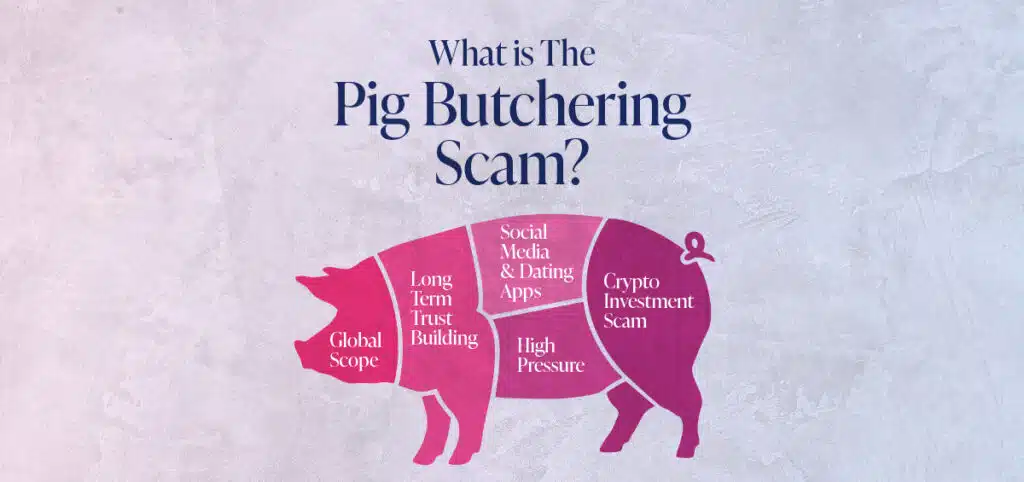
The key components of the pig butchering scam are:
- Long-term trust building. The scammers put a great deal of time and effort into building a relationship with the victim, sometimes over the course of months.
- Multiple contact methods. The scammer will use a range of contact methods, including email, social media, dating apps, and text messages.
- Combines investment and romance scams. The scam usually involves luring the victim into making a bogus investment, but often by pretending to be romantically interested in the victim.
- Global scope. Pig butchering scams are often orchestrated by large-scale international crime syndicates. These gangs operate worldwide using social media and dating platforms.
- Focus on crypto. Cryptocurrencies are highly complex and lack the regulatory frameworks and legal protections of fiat currencies, making them an ideal choice for this type of scam.
- High-pressure tactics. The scammer will often create a sense of urgency by presenting their proposed investment as time-sensitive, inferring it’s a “now or never” opportunity.
Pig butchering scams will feature most or all of these elements, though the specific form the scam takes can vary. Thankfully, as we’ll explain below, pig butchering scams usually follow a similar step-by-step process, which can make them easier to recognise.
How Do Pig Butchering Scams Work? Step-By-Step
A pig butchering scam can be very difficult to spot, given the level of effort the scammers put into building trust with the victim.
However, it usually unfolds through an identical set of steps every time. By familiarising yourself with these steps, you’ll be far less likely to fall victim to it:
- Initial contact. The scammer will make contact with the victim using a fraudulent online identity, such as a fake dating profile, or they may pretend to send a text message to the wrong number.
- Building trust. The scammer will gradually deepen the relationship, often by displaying romantic interest, which can last for weeks or even months, encouraging the victim to share details of their life.
- Introducing investment opportunities. As the scammer builds trust, they will also start to mention their interest in investing, often specifically in cryptocurrencies, and an exciting, limited-time investment opportunity they’ve come across.
- Encouraging a deposit. The scammer will offer to help the victim take advantage of this unique and profitable investment opportunity, directing them to a fraudulent investment platform.
- Showcasing fake returns. The fake platform will seem to display real-time data showing the victim’s investment is performing well, which encourages the victim to invest more funds.
- The vanishing act. Once the scammer is sure the victim has no further funds to deposit, they disappear without warning. At the same time, the investment website or app is taken offline, and the victim has no way to access the scammer or the money they’ve invested.
This scam leaves its victims emotionally and financially devastated. Not only have they been betrayed by a person they trusted, but they will also have lost significant amounts of money.
The victim may have gone into debt to fund their investments, and the scammer may have also used their personal information to commit other forms of identity theft.
Who Is Most at Risk From Pig Butchering Scams? =
While anyone can be affected, some groups are particularly vulnerable to pig butchering scams:
- People new to investing
- Those looking for quick financial gains
- Individuals dealing with emotional hardship, such as bereavement or divorce
The fraud often begins on:
- Dating apps
- Social media platforms
- Messaging services such as WhatsApp
According to a press release from City of London Police, Action Fraud reported 25,843 investment fraud cases in 2024, with total losses of £649 million. Cryptocurrency was the most common asset involved, featuring in 66 per cent of reports, which marks a 16 per cent increase from the previous year.
Victims are often between 30 and 49 years old, a group actively seeking financial opportunities and sometimes less cautious about digital investments.
“Scammers often target people going through major life changes, when they are most vulnerable.”
— Paul Hampson, CEO, CEL Solicitors
Why Do Scammers Use Cryptocurrency?
Pig butchering scammers often insist on crypto payments. Here is why:
- Anonymity and Irreversible Payments: Unlike traditional bank payments, cryptocurrency transactions cannot be reversed and offer no fraud protection. Once confirmed on the blockchain, the funds are gone.
- Lack of Regulatory Oversight: Cryptocurrency exchanges often operate outside of financial regulations such as anti-money laundering (AML) or know your customer (KYC) protocols. In contrast, banks are required to flag or investigate suspicious activity, allowing scammers to operate more freely with crypto.
- Global Accessibility: Cryptocurrency enables instant international transactions, so for scammers working across borders, this provides a quick way to receive funds without triggering fraud detection systems. This has made crypto a prime tool for fraudsters, as highlighted by the Financial Conduct Authority (FCA), which emphasises the need for stronger frameworks.
- Harder to Trace: While every crypto transaction is recorded on the blockchain, tracking the real identity behind a wallet is extremely difficult, allowing fraudsters to hide their tracks and move funds anonymously.
- Easier to Launder Money: Cryptocurrency makes it harder for authorities to freeze and recover fraudulent funds, compared to traditional banking. Scammers can also hide funds using privacy coins or unregulated exchanges.
Expert Insight: Paul Hampson, CEO of CEL Solicitors
“Pig butchering scams are on the rise, representing 66 per cent of the scams we deal with.
“Our clients have lost an average of £32,000, with some cases running into hundreds of thousands of pounds.
“We have seen improvements from financial institutions, with better systems to prevent and detect fraud. It is also encouraging that all police forces in the UK now have dedicated cybercrime teams.”
“Due to the offshore nature of these criminal organisations, the true perpetrators are rarely brought to justice. Law enforcement worldwide must prioritise fraud. Until then, public education is the most effective form of protection.”
— Paul Hampson
How to Spot The Pig Butchering Scam: 6 Key Warning Signs
Below, we’ve listed the warning signs to look out for if you want to stay safe from the pig butchering scam.
- You receive unsolicited messages from strangers. Scammers have sophisticated ways to make contact with potential victims, including using fake profiles on dating apps and social media. If you connect with someone online, take steps to verify their identity.
- An online contact claims to have insider knowledge. If someone you met online claims to have access to a unique investment opportunity, this should be a warning sign. Research their claims and seek professional advice before depositing any funds.
- You feel pressure to make a quick decision. Scammers will often try to prevent you from properly vetting their claims by adding time pressure. The Financial Conduct Authority (FCA) warns that fraudsters exploit the speed of cryptocurrency transactions to pressure people into quick decisions.
- There’s no easy way to withdraw money. When your initial investment seems to have paid off, you will naturally want to withdraw some of your profits. If you can’t do this easily, if the funds are locked for a set period or there are technical issues, for instance, you may be caught in a pig butchering scam.
- You’re encouraged to conceal things from friends and family. Scammers will often seek to isolate their victims from their loved ones and discourage them from discussing their plans. They may claim that the information they’re providing is confidential or suggest that other people will interfere with their romantic relationship.
- If it seems too good to be true, it probably is. The bottom line is that anyone offering you a way to get rich quickly with minimal effort is almost certainly scamming you.
Excuses Scammers Use to Promote Crypto
Scammers use common phrases to make crypto seem like a normal, secure choice. Look out for these red flags:
- “Crypto is faster – no banking delays!”: Scammers claim that cryptocurrency offers instant transfers, unlike traditional bank payments, which can take hours or even days.
- “Banks charge high fees and block big payments”: This would be to steer victims away from traditional banking, which offers fraud protection, presenting crypto as a simpler, cheaper alternative.
- “Crypto is more secure and private”: Scammers play on the myth that cryptocurrency is safer than banks. In reality, crypto payments are largely untraceable and offer no route for recovery once sent.
- “This investment platform only takes crypto”: Some scam operations create fake platforms that only accept cryptocurrency, which can make the scam seem more legitimate.
The Guardian reported on a sophisticated scam network that used fake celebrity endorsements to draw people in, with platforms that often appear polished and professional, but are set up solely to steal crypto. - “I can’t use banks because of government restrictions”: Scammers may pretend to live in politically unstable countries where banking is unreliable or unavailable. This excuse helps them sound more believable and can play on people’s sense of empathy
- “You’ll get better bonuses or returns with crypto”: Many scam platforms promise extra incentives for paying in cryptocurrency. Victims are told they’ll receive a higher return or a discount on fees if they choose crypto, designed to rush people into transferring funds.
- “Crypto is the future – banks are dying”: Scammers often push the idea that banks are outdated, playing into fear of missing out and encouraging people to follow the crowd, without stopping to question the risks.
How to Protect Yourself Against Pig Butchering Scams
To stay safe from pig butchering scams:
- Be cautious of unsolicited investment advice or romantic interest from strangers online
- Do not trust anyone who promises guaranteed returns
- Research any platform or opportunity independently
- Never send money to someone you have not met in person
- Avoid sharing personal or financial information online
- Use only trusted and regulated crypto exchanges
Steps to Take If You’ve Been Scammed
If you’ve been targeted by a pig butchering scam, you must take immediate action to protect yourself. You should:
- Immediately cut off contact with the scammer.
- Change any passwords for your online accounts.
- Contact your bank immediately to block any payments.
- Report the fraud to Action Fraud.
- Collect any information you can related to the scam
- Get legal advice from a qualified solicitor
The last step is especially important if you’re hoping to recover the money you’ve lost. A solicitor with experience in crypto fraud recovery can help track down your lost assets and will maximise your chances of holding the scammers accountable.
How CEL Solicitors Can Help With Pig Butchering Scam Claims
Pig butchering scams are designed to feel personal and trustworthy, which makes them especially cruel. If you suspect that you or someone you know has been targeted, it is important to act quickly and seek professional support.
At CEL Solicitors, we’re specialists in recovering stolen cryptocurrency. With in-depth knowledge of the relevant regulations, as well as the complexities of the crypto world, we’ve helped a wide range of victims to get their money back.
We work on a no-win, no-fee basis, so there is no financial risk to you. To find out how we can help, visit our Fraud and Scam Claims page, call us on 0333 305 4982, or complete our quick online form for a free consultation.