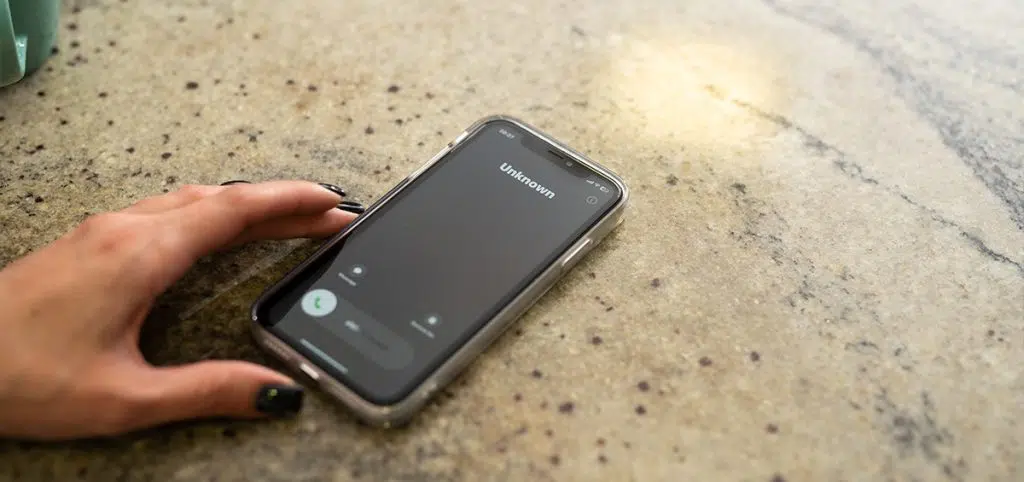

Safe account scams are a serious threat to UK residents. In these scams, criminals call, claiming to be from your bank or even the police. They warn that your money is at risk and insist that you move your savings to a so-called “safe account” which they have set up in your name. They may state that your account has been compromised and that your login details are available online for anybody to access, or they may even claim that there is an ongoing criminal investigation into your local bank branch and that you need to help them catch the criminal employees.
These claims are entirely false. No bank or law enforcement officer will ever ask you to transfer money into another account to protect it. Yet, every year, thousands of people fall victim, losing wages and life savings.
How Safe Account Scams Work
The scam typically follows a familiar pattern:
First, you receive a phone call, an email, or a text, claiming to be from someone in a position of trust, like your bank or a member of the police.
Then they warn that your bank account is at risk. They may say you have been hacked, that your security details have been found on the dark web, or that there is a criminal investigation taking place at your local branch.
They reassure you that everything will be okay as long as you follow their instructions and move your money and assets to a “safe account” they set up in your name. To pressure you, they claim there is only a short window before your money is lost, and they insist you should not tell anyone — or it might “spook” the criminals.
Once your money has been transferred, the caller (the scammer) empties the so-called “safe account”. Because they opened it, they hold all the security details, and they disappear without a trace.
These scammers can target customers of any bank. However, there has been a notable rise in Nationwide safe account scams recently. They often appear professional, using fake caller IDs that match your bank’s number, or sending emails that look identical to genuine bank communications.
Warning Signs of a Safe Account Scam
Knowing what to look out for can prevent serious financial loss. Common red flags include:
- Pressure to act quickly or urgently.
- Requests to move money to an unfamiliar account.
- Threats of legal action or account closure if you don’t comply.
- Unsolicited contact from someone claiming to be your bank or the police.
If something feels off, it usually is. Banks and law enforcement agencies never ask customers to transfer money to a “safe account.”
What to Do If You Suspect a Scam
If you think you are being targeted by a safe account scam:
- Do not transfer any money.
- Hang up and contact your bank directly using the official phone number on your card or statement.
- Report the scam to Action Fraud (the UK’s national reporting centre for fraud) online or by calling 0300 123 2040.
- Check your accounts for unusual activity and change passwords where necessary.
- Warn friends and family to prevent them from falling victim.
Acting quickly can help protect your money and prevent further scams.
Recovering Lost Money
If you have been scammed, you may still be able to recover some or all of your funds. CEL Solicitors have experience helping clients who have lost money to scams, including safe account scams. We can guide you through:
- Reporting the incident to your bank and the authorities.
- Making a claim for reimbursement where possible.
- Taking legal action against fraudsters when feasible.
Even if the chances of recovery are limited, seeking advice early gives you the best possible chance of reclaiming lost money.
Ready to speak with our experts? Get in touch today for a free, no-obligation consultation, or call 0333 305 4982 for the support you deserve.
Safe Account Scam: FAQs:
Can the bank ever ask me to move money to a “safe account”?
No. Banks do not ask customers to transfer money into another account to protect it. Any such request is a scam.
I’ve already sent money to a “safe account.” What should I do?
Contact your bank immediately and report the incident to Action Fraud. Speak to a legal expert to explore options for recovering your money.
How can I tell if a call or email is genuine?
Always check the official contact details of your bank. Do not rely on phone numbers or email addresses provided in unsolicited communications.
Are these scams only targeting certain banks?
No. While some scams are referred to as the Nationwide safe account scam, all UK banks are targets.
What should I do if I’m unsure?
If something feels suspicious, stop and seek advice. It’s always safer to verify before taking any action.
You are not alone. Safe account scams are common, and victims are not at fault. Just tell CEL — we listen, we care, we win.