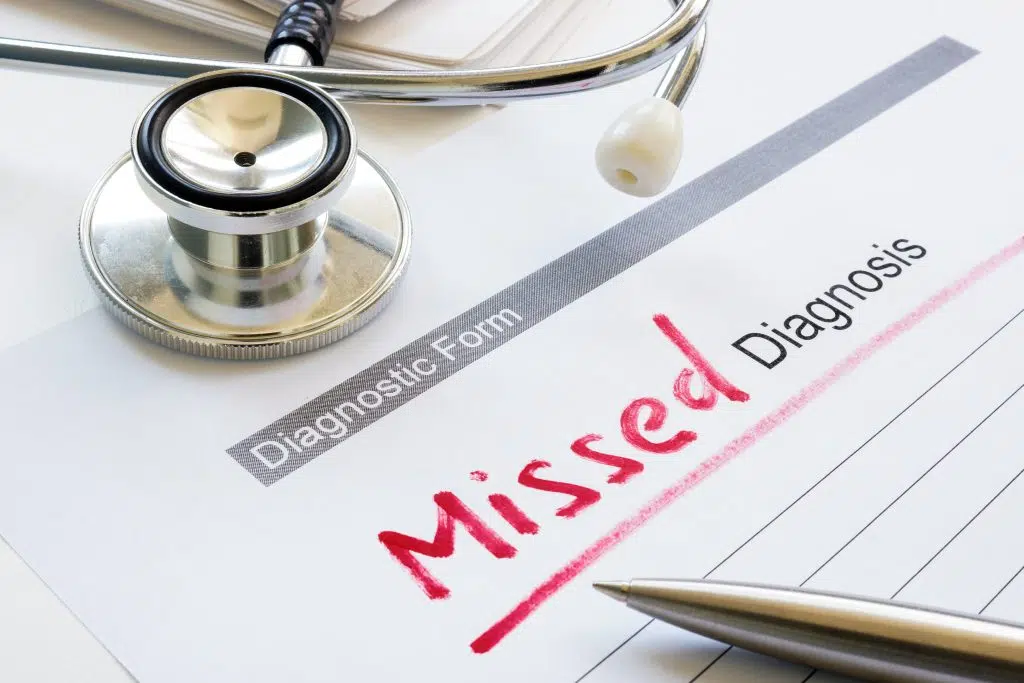
Misdiagnosis or Delayed Diagnosis

Support After a Wrong or Delayed Diagnosis

Being told the wrong diagnosis, or not receiving a diagnosis in time, can have life-changing consequences. These errors may delay treatment, cause conditions to worsen, or lead to avoidable pain and distress. If you’ve been affected by a wrong or delayed diagnosis, CEL Solicitors is here to help. Our team works on a no-win, no-fee basis, so you pay nothing upfront, and if you win, our fees come out of your compensation.

Check if you're eligible

Or call free on 0151 909 8212

An image representing the CEL Solicitors service, Misdiagnosis or Delayed Diagnosis
A line illustration - a brand asset of CEL Solicitors.

What Is a Misdiagnosis or Delayed Diagnosis?

A misdiagnosis happens when a healthcare professional identifies the wrong condition and provides incorrect or unnecessary treatment. A delayed diagnosis means your condition was not identified in time, often leading to more serious complications.

These errors can occur for many reasons, including:

  • Test results being misread

  • Symptoms being overlooked

  • Medical history not being fully reviewed

  • Failure to order the correct tests, scans, or investigations

Conditions that are often misdiagnosed or diagnosed too late include cancer, strokes, infections, heart attacks, and blood clots. These mistakes can happen in both NHS and private healthcare settings.

In some cases, medical professionals may also fail to explain treatment risks or provide misleading advice — all of which can lead to harm.

Check if you're eligible

Types of Diagnostic Errors

Diagnostic mistakes can take many forms, such as:

Failing to diagnose a condition in time

Diagnosing the wrong illness or injury

Delaying referral to a specialist

Misinterpreting scans, blood tests, or X-rays

Providing harmful or unnecessary treatment due to an incorrect diagnosis

Failing to act on test results

How a Misdiagnosis Claim Can Help

A medical negligence claim can help you move forward and access vital support. While NHS care is usually free at the point of use, compensation can ease the financial pressure that often follows a medical mistake.

How to Make a Misdiagnosis or Delayed Diagnosis Claim

Here’s how the claims process works:

Seek Medical Attention

Get the treatment you need and make sure all symptoms, tests, and outcomes are recorded.

Gather Evidence

Collect medical records, test results, and any notes that show how the error occurred and how it affected you.

Contact our team

Our team at CEL Solicitors has experience with complex diagnostic error cases. We’ll guide you clearly through every step.

Initial Consultation

We’ll review your case, explain your legal rights, and talk you through what you could claim for.

Claim Filing

We’ll prepare the legal documents needed to start your claim and outline the impact the error has had on your life.

Negotiation and Settlement

Most cases settle before reaching court. We’ll negotiate on your behalf to get a fair outcome.

Court Proceedings

If needed, we’ll take your case to court and work with expert barristers to present your case.

We’ve already helped thousands of people across the UK.

Speak to our friendly team today. You are not alone, and you may have a case.

Frequently Asked Questions

Your questions, answered.

Medical negligence occurs when a healthcare professional fails to meet the expected standard of care, leading to harm. This can include incorrect or delayed diagnoses, inappropriate medication durations, or errors during medical procedures. If the care provided falls below the standard and results in worsening your condition or injury, it may constitute medical negligence.

Yes, you have the right to access your medical records. You can request them from any medical institution you have visited, including your GP, hospitals, and other care providers. This is important for reviewing your treatment and supporting your claim.

Yes, you can make a claim on behalf of someone else if you are a family member or carer. This is possible if the person is under 18, lacks the capacity to make a claim, or has died due to the negligent treatment.

No, you don’t have to complain first, but it can help. Making a complaint is free. If you were treated by the NHS, you can use the NHS complaints process, and the Patient Advice and Liaison Service (PALS) can help. If you’re not happy with the outcome, you can take it to the Parliamentary and Health Service Ombudsman for free. A complaint can get you answers and an apology, but it won’t usually get you compensation. A legal claim can. If you’ve already complained, we’ll review the response.

Most of our clients use a no-win, no-fee agreement. There’s nothing to pay upfront, and if you win, our fees come out of your compensation. We’ll explain exactly how much before you sign anything. You may also have legal expenses insurance, for example through your home insurance, so it’s worth checking.

To prove medical negligence, you need to show that the healthcare professional owed you a duty of care, failed in that duty, and that this failure caused you harm. You must also demonstrate that this harm led to physical injury, psychological trauma, or financial loss, such as lost earnings. Expert medical evidence is often required to support these claims.

Compensation is made up of two parts. One is for the injury itself and its effect on your life. The other is for money you’ve lost or spent because of it, such as lost earnings, extra medical costs and care. We’ll need medical evidence before we can tell you what your claim may be worth.

Generally, you must start your claim within three years of the incident or from when you discovered the injury. For children, the three-year period begins when they turn 18. If the affected person lacks the capacity to make decisions, the limit starts when they regain that capacity. Claims under the Human Rights Act must be made within one year. Acting quickly is advisable to ensure evidence and witness recollections are preserved.

Yes. You can make a claim for medical negligence even if your care was provided by the NHS. NHS staff have a duty of care to their patients, and if that duty is breached and causes harm, you may be able to seek compensation.

‘Never event’ is the NHS term for a serious patient safety incident that should be wholly preventable if proper safety steps are followed. Examples include surgery on the wrong part of the body, the wrong implant being used, or a swab or instrument being left inside a patient after an operation. If you’ve been affected by a never event, you may have a strong reason to make a claim.

Your case will be handled by our litigation team, made up of qualified solicitors, trainee solicitors and paralegals.

It’s complicated, and every claim is different. Medical negligence claims often take longer than other injury claims, because we need expert medical evidence to show what went wrong and how it affected you. For claims against the NHS, the National Audit Office found it takes around 1.7 years on average from when a claim is made to when it’s resolved. More complex claims, such as serious birth injuries, can take longer. We’ll keep you updated at every stage.

Why Choose CEL Solicitors?

Proven Expertise

We have extensive experience handling personal injury claims.

No-Win, No-Fee Representation

Nothing to pay upfront. If you win, our fees come out of your compensation.

Tailored Advice

Every claim is different, so we tailor our service to your needs.

Proven Success

We are committed to getting the best outcome for our clients.

If you've been injured due to someone else's negligence, don't wait. Contact CEL Solicitors to explore your personal injury options.

A pink line illustration - a brand asset of CEL Solicitors.