If you have mould in your rental property, you may be wondering who is legally responsible to address the problem: the tenant or the landlord?
While mould can cause damage to your home, such as affecting building materials, like wallpaper, drywall, wood, and cosmetic damage, mould can also be a serious health risk.
It can cause respiratory problems, such as coughing, wheezing and breathing difficulties, while also triggering allergic reactions, including itchy eyes, skin rashes and runny noses.
In short, having mould in your home is a problem you need to solve quickly and effectively. But that can sometimes be tricky if your landlord is disputing who’s responsible.
This guide will cover when the responsibility rests with the landlord, when the tenant could be liable to pay for house disrepair as a result of mould, and what steps to take if you have mould in your rental property.
Key Signs You Have Mould
First things first, it’s important to determine whether or not you have mould in your home. There are some key signs to be on the lookout for, including:
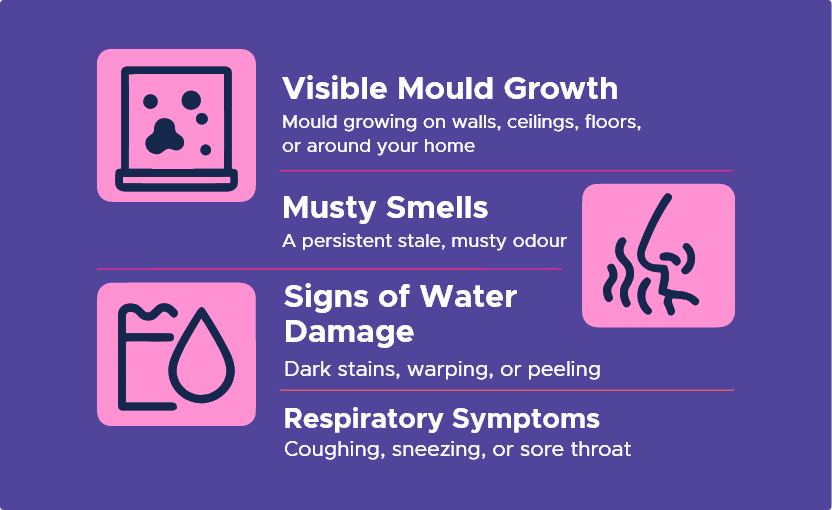
- Visible mould growth: If you can visibly see mould growing on walls, ceilings, flooring or around your home, you might notice discolouration (typically black, green, white or brown) and unusual textures (fuzzy or slimy to the touch). Mould tends to grow around windows, in bathrooms or kitchens – essentially, areas where it can be humid or water can linger.
- Musty smells: Typically, mould will have a musty, stale smell. Sometimes, you may not be able to see mould, but you can smell it. This could indicate that mould is hidden behind walls or in other concealed areas.
- Signs of water damage: Dark stains, warping or peeling are signs of water damage, which could be a symptom of potential mould growth.
- Respiratory symptoms: Coughs, sneezing, sore, tickly throats or runny noses can also indicate a mould problem in your home.
What Are the Laws on the Responsibility of Mould in a Rental Home?
According to UK law, landlords are legally required to provide safe and habitable living conditions for tenants, which include addressing mould problems. This obligation is set out in the Landlord and Tenant Act (1985).
In cases of dispute, local councils and courts often rely on the Housing Health and Safety Rating System (HHSRS) to assess whether the mould poses a risk to tenants’ health and safety.
The landlord must promptly try and work out what is causing the problem. If they can’t determine this themselves, they may require a damp surveyor to provide expert advice. The landlord would also need to arrange for any house disrepair to be fixed.
As well as addressing the mould itself, landlords must also fix elements that can contribute to mould and damp spreading, such as:
- Cracked walls or rotten window frames
- Leaking roofs or faulty guttering
- Not enough ventilation in the home
- Leaking internal pipes
- Broken boilers and heating systems
Below, we break down when landlords are legally responsible for fixing mould problems and when the duty may fall on the tenant.
When Is Mould the Landlord’s Responsibility?
Landlords could be liable for mould if they fail to meet their legal duties to provide a safe and habitable environment for their tenants. This includes if:
- The mould was present before the tenant moved in: If the landlord knew about the mould problem beforehand, they contributed to making the property uninhabitable at the start of the tenancy.
- Faulty installation: Mould can be caused by faulty installations of building components, such as insulation, plumbing, ventilation or exterior elements.
- Property issues: Issues such as leaks, blocked gutters and downspouts and poor ventilation can quickly become a breeding ground for mould.
- Multiple units are affected: If the mould or damp is spreading between properties, or your home is a byproduct of a neighbour’s damp issue, the responsibility would lie with the landlord.
- It’s stated in the agreement: If the tenancy agreement states that mould and damp are the landlord’s responsibility.
What About for House in Multiple Occupation (HMO) Landlords?
HMO landlords have more responsibilities when it comes to dealing with mould problems in shared accommodation.
If mould is discovered in communal areas – like shared kitchens, bathrooms or lounges – the landlord is responsible for eradicating the mould and making any necessary repairs.
However, if it’s clear that mould was caused by the tenants – for example, due to not ventilating the property – then they may be responsible for fixing it.
The landlord would still be responsible for the repairs and addressing the root of the problem, but may expect the tenants to fund the costs.
When Is Mould the Tenant’s Responsibility?
If mould has been caused by the tenant’s own actions and behaviour, they could be held legally responsible. This could be due to:
- Poor ventilation: This could include not using extractor fans in kitchens and bathrooms, or not opening the windows regularly for sufficient airflow in the home.
- Creating and trapping moisture: Drying clothes on radiators, for example, leads to condensation, which can result in mould.
- Not turning on central heating: If your home isn’t heated enough during the cold months, it’s an attractive place for damp and mould to form.
- Negligence: If you haven’t immediately reported mould to your landlord, and this has resulted in house disrepair, you can be made liable for associated costs.
- If stated in the agreement: If the tenancy agreement states that it’s the tenant’s responsibility to deal with mould, then you are legally liable to do so.
What to Do if You Have Mould in Your Rental Home? Step-By-Step Guide
- Check the tenancy agreement
If you’ve noticed some of the common signs of mould in your home, the first thing you should do is check your tenancy agreement. In there, it should specify clauses relating to mould and who is responsible.
In most cases, it should indicate that responsibility lies with the landlord, but knowing where you stand is important before you start any discussions.
- Document the issue
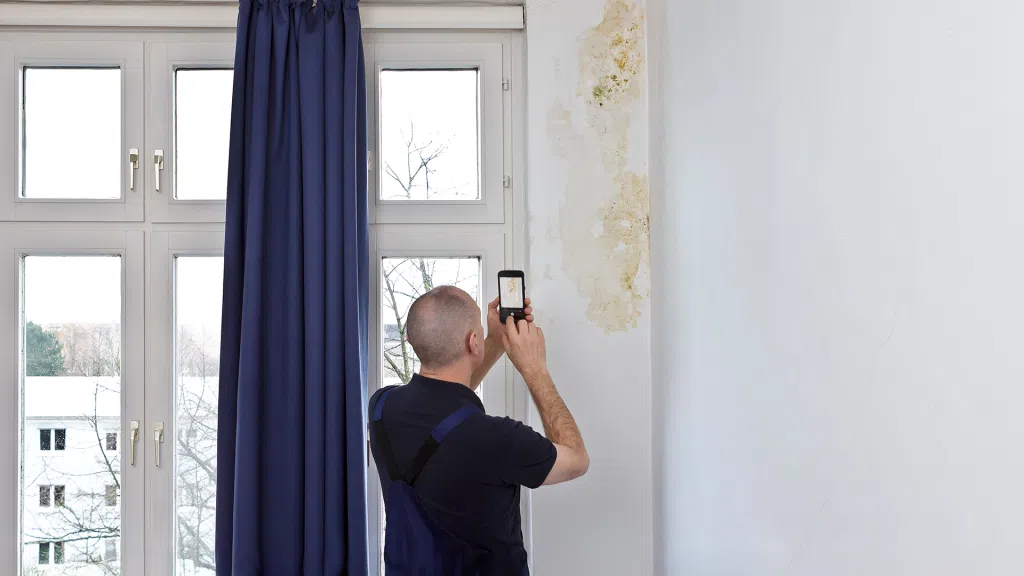
Spotted water marks on your ceiling? Dark, mould spores on your walls? Signs of discolouration on wallpaper? Whichever signs you’re seeing, make sure you take plenty of photographs as evidence.
Note down any key dates or details relating to the issue, and be sure to inform the landlord as soon as possible about any house disrepair as a result, such as peeling wallpaper, paintwork or water damage.
This way, you’ll be able to prove that you’ve been monitoring the situation from the beginning and that you’ve informed your landlord immediately. If there’s any resistance from the landlord, this documentation can be used as evidence.
- Alert your landlord to the problem
The next step is to contact your landlord and let them know about the mould, no matter who might be responsible.
Be sure to keep a clear record of all communication, such as emails, texts or written notes, as this can serve as proof if the landlord fails to take action or delays dealing with the issue.
The landlord might arrange for a damp surveyor to survey the problem, suggest that you handle the situation yourself or ask to inspect the situation in person, especially if the mould has caused damage to the property.
- Getting rid of the mould
The most important step in the process: removing the mould and making sure it doesn’t return.
As stated, your landlord is legally responsible for getting rid of the mould and investigating the root of the problem.
However, in some cases, your landlord may be unwilling to help or contest the responsibility. This can lead to mould and damp spreading, risking health problems and house disrepair.
Quick ways to solve the surface-level problem could include using mould and mildew removers, such as sprays, or cleaning with bleach and vinegar. However, the root of the issue will need to be addressed by either the landlord or a damp surveyor, who can eradicate the mould.
To make sure mould doesn’t return, try to ensure:
- Your house is well ventilated (open windows regularly, use extractor fans or air purifiers)
- Your central heating is used during the colder months (or use fan heaters for rooms where mould has been an issue)
- You’re not drying clothes on radiators, as this can trap moisture
- In severe cases, a damp proof course (DPC) can be injected into the walls by a mould and damp specialist
Whether your landlord is helping you to get rid of the mould or not, it can spread quickly and cause health problems. That’s why it’s important to act fast to keep your home secure.
Need Professional Legal Help?
If you’re dealing with a mould problem in your rental home and believe it’s not your fault, you may be able to sue your landlord.
You deserve to live in a property where:
- You’re not at risk from respiratory problems or allergies,
- Your possessions are safe and not at risk from water damage
- You aren’t left with additional expenses, such as heating or electricity bills to heat your home.
That’s where CEL Solicitors can help. We specialise in housing disrepair claims and can support you to make sure your landlord takes responsibility, especially if you’re stuck in a dispute over who’s to blame.
If you’ve already made a claim with another solicitor but it’s not progressing, don’t worry – we can step in to pursue a repair breach claim and push for the action you deserve.
And the best part is, we operate on a ‘No-Win, No-Fee’ promise, meaning there’s nothing to pay upfront – just simple support when you need it most.
Ready to make your claim? Contact us today for a free, no-obligation consultation. Call 0333 305 4982 for the support you deserve.