
As the Black Friday and Cyber Monday weekend approaches, so does the increase in Black Friday online scams.
While some shop for Christmas presents, splash out on tech and grab the best deals over the sales weekend, each year, unsuspecting victims are conned out of millions attempting to secure a bargain.
Looking into Black Friday crime statistics, in 2024 alone, Black Friday scams increased by 22%, with shoppers losing an average of £970.
That’s why knowing the different types of Black Friday scams to look out for is essential for your online safety. The National Cyber Security Centre released a statement in 2023 encouraging shoppers to stay vigilant as scammers are rife this Black Friday season.
Through this guide, we’ll be highlighting some of the most common Black Friday scams, tips on avoiding them and what to do if you have been scammed, including seeking legal support.
Types of Black Friday Scams in the UK
While there are multiple ways Black Friday scammers can trick you into revealing sensitive data around the sales weekend, there are three most common types of Black Friday scams in the UK:
- Phishing Scams
- Vishing Scams
- Social Networking Scams
We’ll cover each of these in more detail to help you stay aware, vigilant and safe when you’re online shopping.
1. Phishing Scams
Phishing scams are a prevalent form of email scams, designed to trick individuals into divulging sensitive personal information. These are also some of the most common types of scams in the UK – Black Friday or not.
However, with Black Friday being a prime shopping occasion, it becomes an opportune time for phishing scams to occur.
In a typical phishing scenario, scammers will pose as legitimate brands, like Amazon, and send deceptive emails or messages, often claiming that there has been an issue with the person’s account or a recent purchase.
Around Black Friday, it’s very likely that scammers will entice victims with fraudulent Black Friday deals, linking them to a website that resembles a legitimate platform, but it’s actually a fake website.
Users are then prompted to enter sensitive information such as usernames, passwords, and card details, unknowingly handing it over to sophisticated fraudsters.
How to Avoid Black Friday Phishing Scams
- Remember what a legitimate company would do: Authentic communication from retailers will never ask for sensitive information over email or direct message. Therefore, make sure to only process payments on the retailer’s secure payment system.
- Never click on attachments: Whether in text messages, emails or invoices, never click through to an attachment on a suspected scam email. Opening attachments can download malicious software on your device, making you vulnerable to phishing attacks.
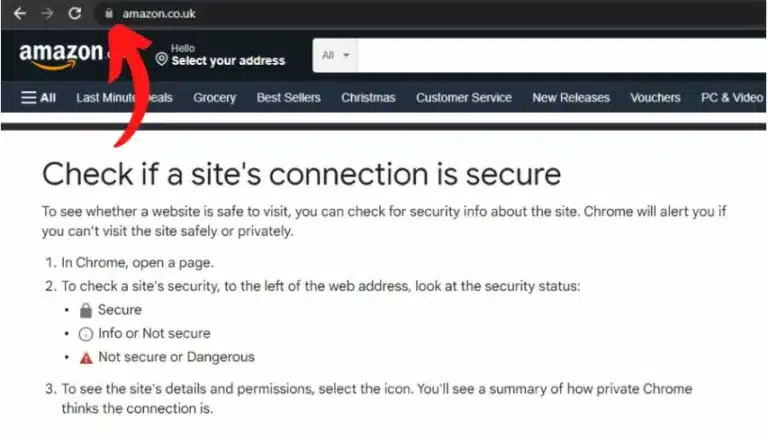
- Check for HTTPS/secure websites: You can also verify the legitimacy of a website by checking that it has a padlock icon in the URL bar, like in the image below. You could also use an online tool to run a search on the domain name.
Want to brush up on your knowledge of how to avoid phishing scams in the UK? Our dedicated guide has you covered.
2. Vishing Scams
Vishing, short for voice phishing, is a phone scam which manipulates victims into sharing sensitive information and ultimately being defrauded of their money.
As Black Friday approaches, unfortunately, that means vishing scams can become more prevalent, as scammers attempt to prey on those who have been busy shopping online.
Similar to phishing, in a vishing scam, fraudsters will pose as legitimate organisations, such as a retailer or a bank and claim that the person over the phone has a pending payment, which must be paid immediately.
Some vishing attempts involve leaving voicemails instructing victims to call back a specific number, which then leads to a fake support line where personal information is solicited. Vishing scammers can also use free AI voice tools to mimic voice recordings, creating compelling dialogues used to trick call recipients.
Vishing Black Friday scammers may even go as far as cloning the phone number and caller ID of a legitimate organisation, tricking the victim into believing that they are reputable.
How to Avoid Vishing Black Friday Frauds
- Consider what an official company would do: Legitimate organisations will not ask for personal or financial information over the phone.
- Listen for the dial tone: When you pick up the phone to a number you don’t recognise, if you hear a short beep at the beginning of the call, like the call is connecting, this is almost always a scam.
- Hang up if you’re concerned: If you receive an unexpected call requesting such information, hang up and verify the caller’s identity through official channels.
3. Social Networking Scams
And, of course, social media and networking websites have a large part to play in scamming innocent shoppers over the Black Friday weekend.
Bargain hunters should remain vigilant using social networking sites like eBay, Instagram, Gumtree and Facebook Marketplace, which, according to NatWest, are the most used sites by scammers.
However, scams can happen on any platform, so stay vigilant wherever you’re shopping, whether that’s TikTok Shop, Etsy, X or any other retailing social platform.
Taking advantage of discounts and sales ahead of Christmas, fraudsters will often advertise products such as TVs, smart doorbells, and designer clothes at highly discounted prices.
Shoppers may be asked to purchase their goods via bank transfer or make a quick decision because of some sort of time pressure, but unbeknownst to the shopper, the purchased items will unfortunately never arrive.
How to Avoid Social Networking Scams on Black Friday
- Common sense: If a deal seems too good to be true, it probably is. Be on the lookout for urgent language and deals that are unrealistic.
- Do your research: Ensure that you research the seller by searching their profile for reviews and contact details. If there’s no address or phone number provided, this can indicate that the seller may not be genuine.
- Avoid clicking on links: Scam links will take you to a fake website, which is designed to harvest your data, especially bank account information. Be vigilant and ensure it’s a secure website before entering any personal information.
Other Examples of Black Friday Fraud Attempts
- Gift card schemes: A common Black Friday scam prompts shoppers to sign up for gift cards as Christmas presents on fake portals, mimicking trusted companies, where their data will be harvested.
- Using public WiFi networks: Especially around Black Friday, be cautious when using public WiFi networks – especially when signing into sensitive accounts, such as your bank account – as hackers can intercept information from these networks.
- Fake delivery notifications: A common type of Black Friday scam is to receive fake delivery notifications, prompting you to “track your shipment”, which leads you to a fraudulent URL. Look out for spelling and grammar mistakes in these messages, as well as inconsistencies and urgent language.
- Fake order confirmations: You may also receive spam scam emails, typically in your junk inbox (although some can make their way into your primary inbox), notifying you of a fake order confirmation. Do not click on these attachments (which will likely be an “invoice”), as this is how malicious spyware can be installed on your device.
- Fake retail websites: As we mentioned earlier in the phishing section, scammers can create fake websites which are designed to harvest your personal data, leaving you vulnerable to attacks.
Now that you know the most common types of Black Friday scams, it’s crucial to exercise caution when searching for deals this Black Friday. Remaining vigilant and being safe online could save you from losing out on hundreds of pounds, so while some deals can be truly amazing, be sure to question what you see, and make sure it’s always from a legitimate company.
What To Do if I Have Fallen Victim to a Black Friday Scam
If you have fallen victim to an online Black Friday purchase scam, that’s where CEL Solicitors can help.
- Document: Firstly, document the attack as best as possible. This includes taking screenshots, saving any email headers, jotting down suspicious URLs – anything that can be used as evidence in your case.
- Report: Next, ensure you’ve officially reported the scam. If the scammer is pretending to be a legitimate company, report this scam to that company to ensure they’re aware and can block future attacks. Also report it to your bank so they can ensure your account is protected, as well as the authorities through Action Fraud – the UK’s national centre for reporting cybercrime and fraud.
- Make a claim: With your evidence and your official reports, you can then make a claim against the scammer with the help of a trusted fraud and scam solicitor, like CEL.
We understand just how distressing being scammed can be – both emotionally and financially – especially in the lead-up to Christmas. You are entitled to receive the compensation you deserve for this unjust attack.
Our expert fraud and scam team are on hand to offer free initial advice, all on a no-win, no-fee basis – meaning you can seek the justice you deserve without financial worry.
Call us today for free on 0330 029 8479 or complete our online enquiry form, and we will be in touch to guide you through your claim from start to finish.