
Burst pipe in your rental home? This situation is never ideal, especially if the temperature is plummeting and you can’t access your central heating.
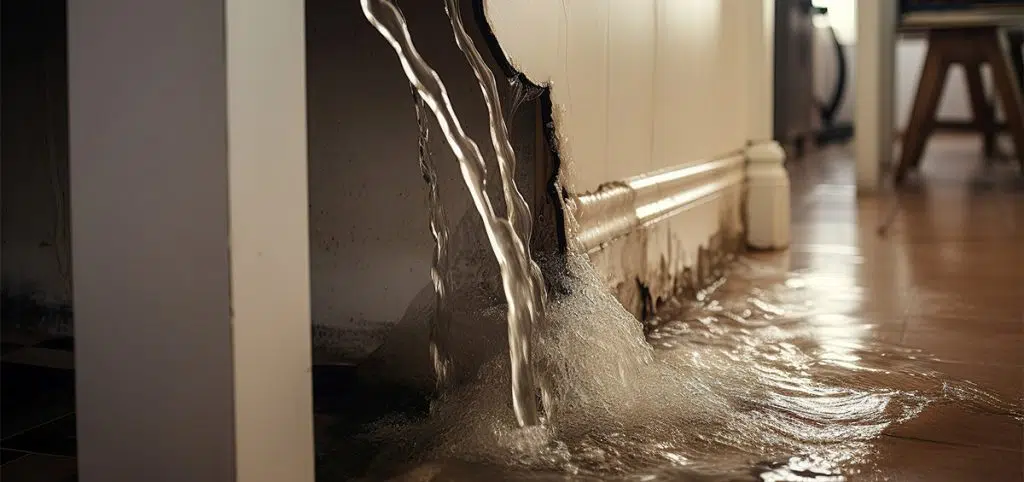
Not only that, but burst pipes can also cause significant water damage to properties. Quickly, they can lead to flooding and mould, destroying possessions, walls and floors, and potentially forcing people to leave their homes.
But, whether your pipe has burst due to freezing in cold temperatures or natural wear and tear, the main question is: who is responsible for repairs – landlord or tenant?
This guide breaks down the rules regarding burst pipe repairs, who’s responsible and when, and how to navigate a burst pipe in a rental property.
What are the Laws on the Responsibility of Burst Pipes in Rental Properties?
According to UK law, landlords must provide habitable and safe living conditions for all tenants, which includes addressing burst pipes. This is highlighted in the Landlord and Tenant Act (1985).
Local councils and courts typically resolve disputes by referring to the above statement, often relying on the Housing Health and Safety Rating System (HHSRS) as a benchmark for enforcement.
As well as your property’s electrical wiring, heating and hot water and other essential components that keep a house running, burst pipes are up there as a top priority for your landlord to repair in a timely manner.
By law, this means that there must be essential plumbing, including a working toilet, shower, sink and other necessities.
We’ll break down when a burst pipe is a landlord’s legal responsibility and when the responsibility could lie with the tenant.
When is a Burst Pipe the Landlord’s Responsibility?
In general, landlords are legally responsible for repairing burst pipes in a rental property. By not doing so, they are violating their duties to keep your environment safe and habitable.
Responsibility will lie with them in these instances:
- Wear and tear: Natural wear and tear to pipes due to corrosion is common over time, meaning the responsibility would fall to the landlord to repair and cover the costs.
- Pre-existing problem: For example, if there has been a pre-existing leak in the toilet before the tenant moved in, the landlord would be liable.
- High water pressure: A common reason for a burst pipe, high water pressure can cause excessive strain on pipes (especially if they’re old), leading to leaks or bursts.
- Structural problems: Although not as common, structural problems, such as foundations shifting due to soil instability, or if the building’s structure is compromised, this puts pressure on connecting pipes, causing them to crack or burst.
- The leak is coming from a neighbouring property: If the rental property has house disrepair from water damage due to a neighbouring property, the responsibility still lies with the landlord for repairs.
- The tenancy agreement: If it states in the agreement that burst pipes should be handled by the landlord.
What about for House in Multiple Occupation (HMO) landlords?
HMO landlords have extra responsibilities surrounding burst pipes and water damage in shared housing. If leaks, burst pipes or water damage are found in communal areas, the landlord is fully responsible for addressing the issue.
However, if the burst pipe is caused by the tenant’s actions (such as leaving the tap on in their en-suite bathroom, causing flooding), the responsibility shifts to them to cover the costs of repairs and any water damage.
When is a Burst Pipe the Tenant’s Responsibility?
As a tenant, a burst pipe, including house disrepair from water damage, becomes your responsibility if it’s been caused by your actions or neglect, such as:
- Frozen pipe: One of the most common reasons for a burst pipe is not heating your house enough during the colder months. If a pipe bursts after being frozen, responsibility could rest with the tenant, as they haven’t been insulating the property sufficiently.
- Leaving the tap on: For example, if the tenant accidentally floods the bathroom by leaving the tap on, causing water damage, the tenant would be liable.
- Clogs or blockages: Although the landlord would generally still be liable for repairs for burst pipes caused by a clog, if the blockage was due to the tenant’s actions (e.g. flushing inappropriate items down the toilet), the tenant could be held liable.
- Negligence: If the tenant fails to inform the landlord of any water leaks, burst pipes or water damage in a timely manner, they would then become liable for the costs of any house disrepair.
- The tenancy agreement: If it states in the agreement that burst pipes should be handled by the tenant.
What to Do if You Have a Burst Pipe in Your Rental Home? Step-by-step Guide
1. Check the tenancy agreement
Firstly, if you have a burst pipe or water damage as a result, check your tenancy agreement to see if there are any clauses relating to pipe repairs in the home.
It will likely state the landlord is responsible, but it’s good to make sure before you start a conversation with them.
2. Document the issue
Next, be sure you take multiple photographs of the burst pipe or water damage, including any areas of house disrepair as a result.
Also, note down any key dates and details of the issue. This means that you’ll have documentation to prove when the problem occurred and how long it took to resolve.
3. Alert your landlord to the problem
Next, you’ll need to alert the landlord to the issue, regardless of who’s at fault or who’s responsible for it.
They may have prior knowledge of the situation – for example, there may be an area in the bathroom that is prone to leaking, or they may contest that the burst pipe is your fault. In some cases, the landlord will arrange an inspection to see the damage for themselves.
The burst pipe may have also caused house disrepair, which the landlord will also need to be informed about.
Making sure your landlord is informed about the state of their home is important for continuing good relationships and preventing any future disputes.
Be sure to keep all your communications with your landlord carefully documented, so if they don’t cooperate, you’ll have proof that they were informed and the issue was not dealt with.
4. Fixing the burst water pipe and any water damage
You should only carry out repairs for burst water pipes if your tenancy agreement states that you can. You cannot be forced to complete the repairs that are the landlord’s responsibility.
They’ll also need to address any water damage that’s caused any house disrepair as a result.
If your landlord is neglecting to repair the burst pipe, you can contact the environmental health department at your local council for help. They are legally bound to take action if they believe the problems could harm you or cause a nuisance to others.
However, if you think your rental home is unsafe to live in, you should contact the housing department at your local council. They’ll complete a Housing Health and Safety Rating System (HHSRS) assessment, and, again, are legally bound to take action if they think your home has serious health and safety hazards.
Need Professional Legal Help?
If your landlord has neglected to keep your rental home habitable due to a burst pipe, you will have grounds to make a claim against them.
You deserve to live in a properly maintained property, without fear of mould, damp, cold or water damage.
That’s where CEL solicitors come in. We can help you claim compensation for housing disrepair if you’re in a dispute with your landlord over who’s responsible.
We also have a “No-Win, No-Fee” approach – this means that legal fees won’t hold you back from making your claim.
If you’ve made a successful claim with another solicitor but no action was taken, we can also help pursue a repair breach claim and ensure accountability.
Contact us today for a free, no-obligation consultation. Call 0330 822 3752 to get the support you deserve.