
When rats invade your home, it can leave you feeling unsettled and unsure where to turn. But you don’t have to face it alone. Is it up to your landlord to deal with the problem, or is it the tenant’s responsibility?
If the infestation isn’t your fault but your landlord refuses to act, can you take legal action?
This guide explains your rights, the steps you can take, and how to get legal support if your landlord isn’t fulfilling their duty.
Key Signs You Have a Rat Infestation
First, it’s important to determine whether or not you have a rat infestation. There are some key signs to be on the lookout for, including:
- Rat droppings: One of the biggest indicators is droppings, typically dark brown/black cylindrical pellets, about the size of a grain of rice.
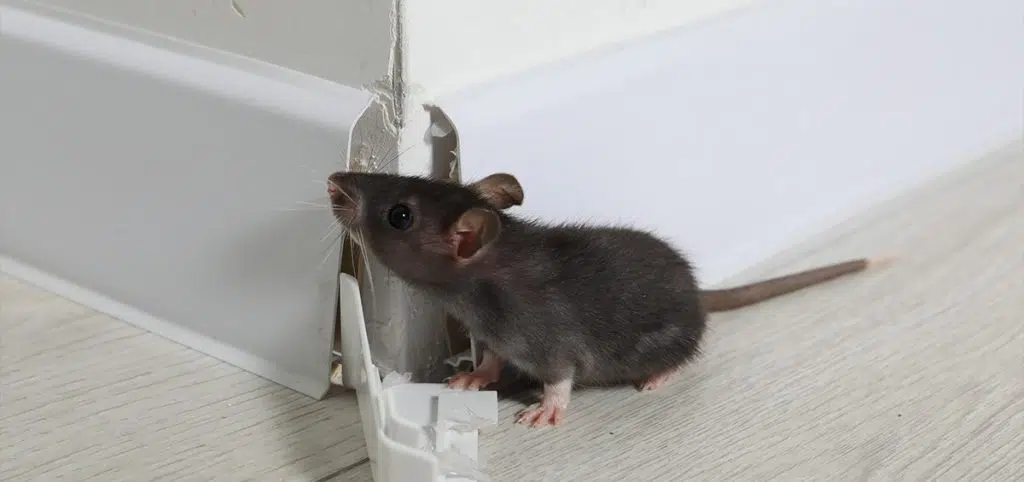
- Gnaw marks: Chewed holes in walls, food packaging, electrical wiring, or anything else indicate you may have a rat problem.
- Rodent runways: Rats pave their own way, so be on the lookout for paths they’ve created through insulation, along pipes, underneath fences in the garden or behind walls.
- Unusual pet behaviour: Has your cat or dog been acting strangely lately? It could be because they’re on high alert and sense the presence of rodents in their environment.
- Footprints/tail marks: If you have any dusty areas that rats could be hiding in – for example, basements or lofts – you might also see small footprints or drag marks from their tails.
- Urine odour: Rat urine tends to smell pretty strong, like ammonia, so you’d likely notice the smell if you do have an infestation.
- Burrows: Be sure to check your garden, too, as rats can make burrows in well-sheltered areas, such as rockeries, underneath overgrown bushes and under or around sheds.
What Are the Laws on the Responsibility of Rat Infestations?
Under UK law, landlords are legally required to provide safe and habitable living conditions, which include dealing with pest problems, particularly serious ones like rat infestations. This obligation is set out in the Landlord and Tenant Act (1985).
In cases of dispute, local councils and courts often rely on the Housing Health and Safety Rating System (HHSRS) to assess whether the presence of rats poses a risk to tenants’ health and safety.
That said, the Act doesn’t cover every possible pest-related situation, and issues involving rats can sometimes lead to disagreements over who’s at fault, especially if poor hygiene or property misuse is involved.
Below, we break down when landlords are legally responsible for dealing with rats, and when the duty may fall on the tenant.
When Is a Rat Infestation the Landlord’s Responsibility?
Landlords could be liable to be responsible for rat infestations if they fail to meet their legal duties to provide a safe and habitable environment for their tenants.
This includes if:
- The rat infestation was present before the tenant moved in: If the landlord knew about the infestation beforehand, they contributed to making the property uninhabitable at the start of the tenancy.
- Property issues: Issues such as gaps in foundations, unsealed vents and chimney, and neglected gardens (before tenancy started) can provide rats with easy access to properties, and the blame would fall on the landlord.
- Multiple units are affected: If rats are running between lofts in terraced houses or between apartment blocks, again, the responsibility would be with the landlord.
- It’s stated in the agreement: If the tenancy agreement states that pest control (including dealing with rat infestations) is the landlord’s responsibility.
You can also check if landlords are responsible for mice with our handy guide.
What About for House in Multiple Occupation (HMO) Landlords?
HMO landlords have more responsibilities when it comes to dealing with rat infestations in shared accommodation.
If rats are discovered in communal areas – like shared kitchens, hallways, or lounges – the landlord is typically responsible for arranging pest control and taking necessary steps to remove them.
However, if it’s clear that the rat problem was caused by the tenants – for example, by leaving out food waste, not cleaning up properly, or letting rubbish build up – then they may be responsible for fixing it.
In this case, the tenants would usually be expected to sort out the problem themselves, just like in a regular, non-HMO tenancy.
When Is a Rat Infestation the Tenant’s Responsibility?
If the infestation has been caused by the tenant’s own actions and behaviour, they will be legally responsible. This could be due to:
- General uncleanliness: Such as not emptying the bins, leaving food sitting out, not vacuuming up crumbs and pieces of food, or general poor hygiene and sanitation.
- Cluttered areas: If your house or garden is too cluttered, it could be an attractive location for rats. Rats often hide and nest in cluttered places like basements, lofts and sheds. Overgrown gardens also give them good cover to live and breed.
- Leaving food outside: Although feeding the birds can be a wholesome hobby, bird feeders and bits of food left out on the lawn can attract rats, unfortunately, which would also be classed as the tenant’s responsibility.
- Negligence: If you haven’t immediately reported the suspicion of rats, you can be liable for any house disrepair that has happened as a result.
- If stated in the agreement: If the tenancy agreement states that it’s the tenant’s responsibility to deal with rat infestations, then you are legally liable to do so.
What to Do if You Have a Rat Infestation in Your Home? Step-By-Step Guide
- Check the tenancy agreement
If you’ve noticed some of the telltale signs that you have a rat problem, the first thing you should do is check your tenancy agreement. In there, it should specify clauses relating to pest infestations in the home.
It may state that the landlord is responsible for any pest infestations, or it might state it’s the tenant’s responsibility. In some cases, it may not state anything at all.
Knowing where you stand is important before you start any discussion with your landlord.
- Document the issue
Spotted gnaw marks on your electrical wiring? Dark, cylindrical-shaped droppings? Burrowing in your garden? Whichever signs you’re seeing, make sure you take plenty of photographs as evidence.
Jot down any key dates or details relating to the infestation, and be sure to inform the landlord as soon as possible about any house disrepair as a result.
This way, you’ll be able to prove that you’ve been monitoring the situation from the beginning and that you’ve informed your landlord immediately. If there’s any resistance from the landlord, this documentation can be used as evidence of neglect.
- Alert your landlord to the problem
The next step is to contact your landlord and let them know about the rat problem, no matter who might be responsible.
Be sure to keep a clear record of all communication – emails, texts or written notes – as this can serve as proof if the landlord fails to take action or delays in dealing with the issue.
The landlord might arrange pest control for the rat infestation, suggest that you handle it yourself or ask to inspect the situation in person, especially if the rats have caused any damage to the property.
- Getting rid of the rat infestation
The most important step in the process: removing the rats from your property.
Rats can be dangerous, especially if you have small children or pets. Children or pets may mistakenly put rat droppings in their mouths, which carry disease and could make them very unwell. Diseases can also be transmitted through bites, scratches and contamination of food and/or surfaces where food is prepared.
To get rid of a rat infestation, start by removing anything that might attract them:
- Keep food sealed
- Clean up crumbs and spills
- Take out rubbish regularly
- Avoid leaving pet food out
- Clear clutter and block access to hiding spots (like basements, sheds or overgrown gardens)
Next, seal any holes or gaps in walls, floors, doors and around pipes. Use steel wool, wire mesh or strong sealant to block their entry points.
Whether your landlord is helping you to get rid of the rat infestation or not, rats multiply quickly, so it’s important to act fast and keep your space clean to prevent them from breeding further.
If the infestation is serious or ongoing, it’s best to contact professional pest control services, which is something the landlord is typically responsible for organising.
Need Professional Legal Help?
If you’re dealing with a rat infestation and your landlord is refusing to do anything about it, you may be able to sue your landlord.
You deserve to live in a property where you feel safe and your family isn’t at risk of disease.
That’s where CEL Solicitors can help. We specialise in housing disrepair claims and can support you in making sure your landlord takes responsibility, especially if you’re stuck in a back-and-forth over who’s to blame.
Already made a claim with another solicitor, but still no progress? Don’t worry – we can step in to pursue a repair breach claim and push for the action you deserve.
And with our ‘No Win, No Fee’ promise, there’s nothing to pay upfront – just straightforward support when you need it most.
Ready to get started? Get in touch today for a free, no-obligation consultation. Call 0333 305 4982 for the support you deserve.